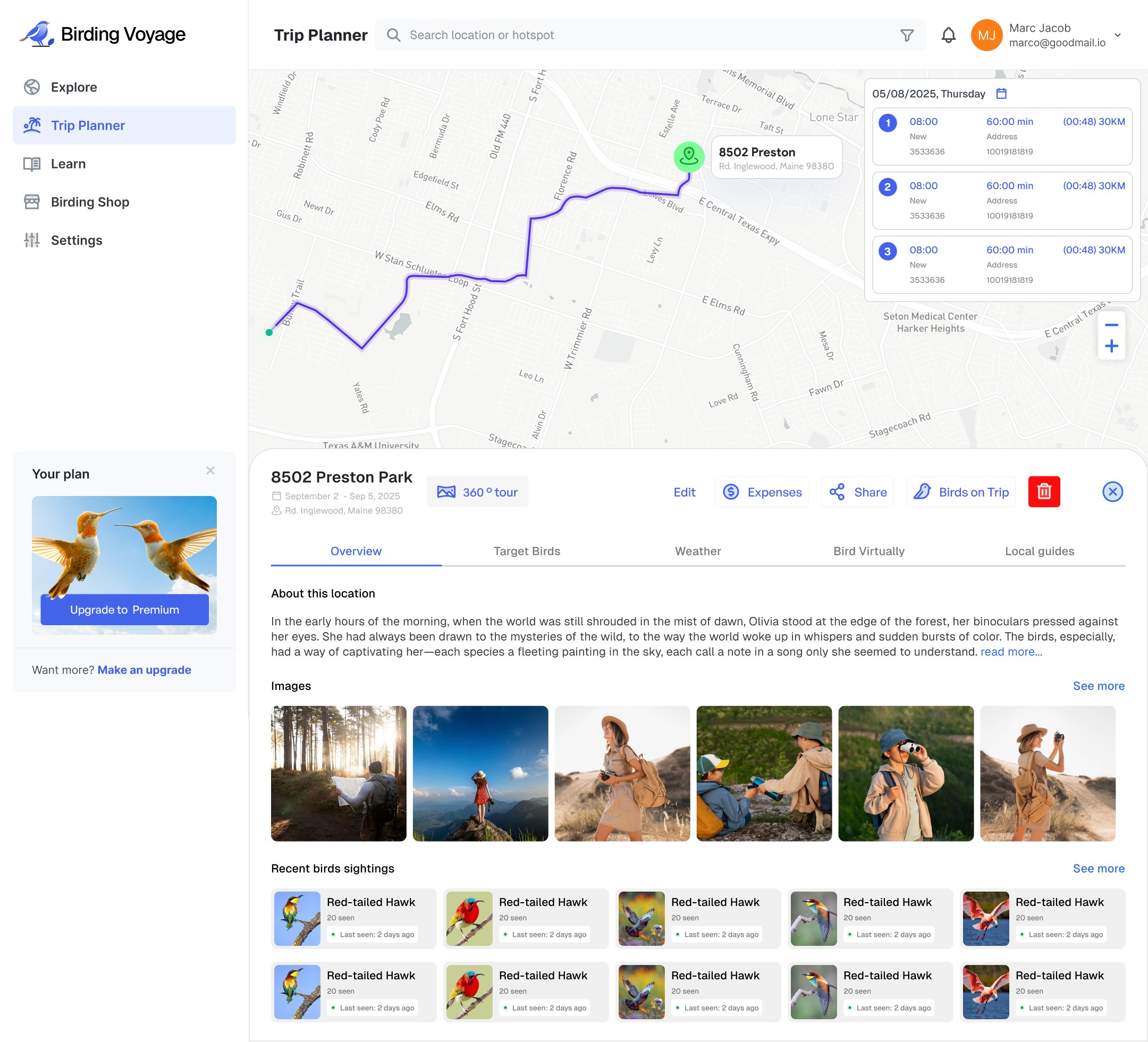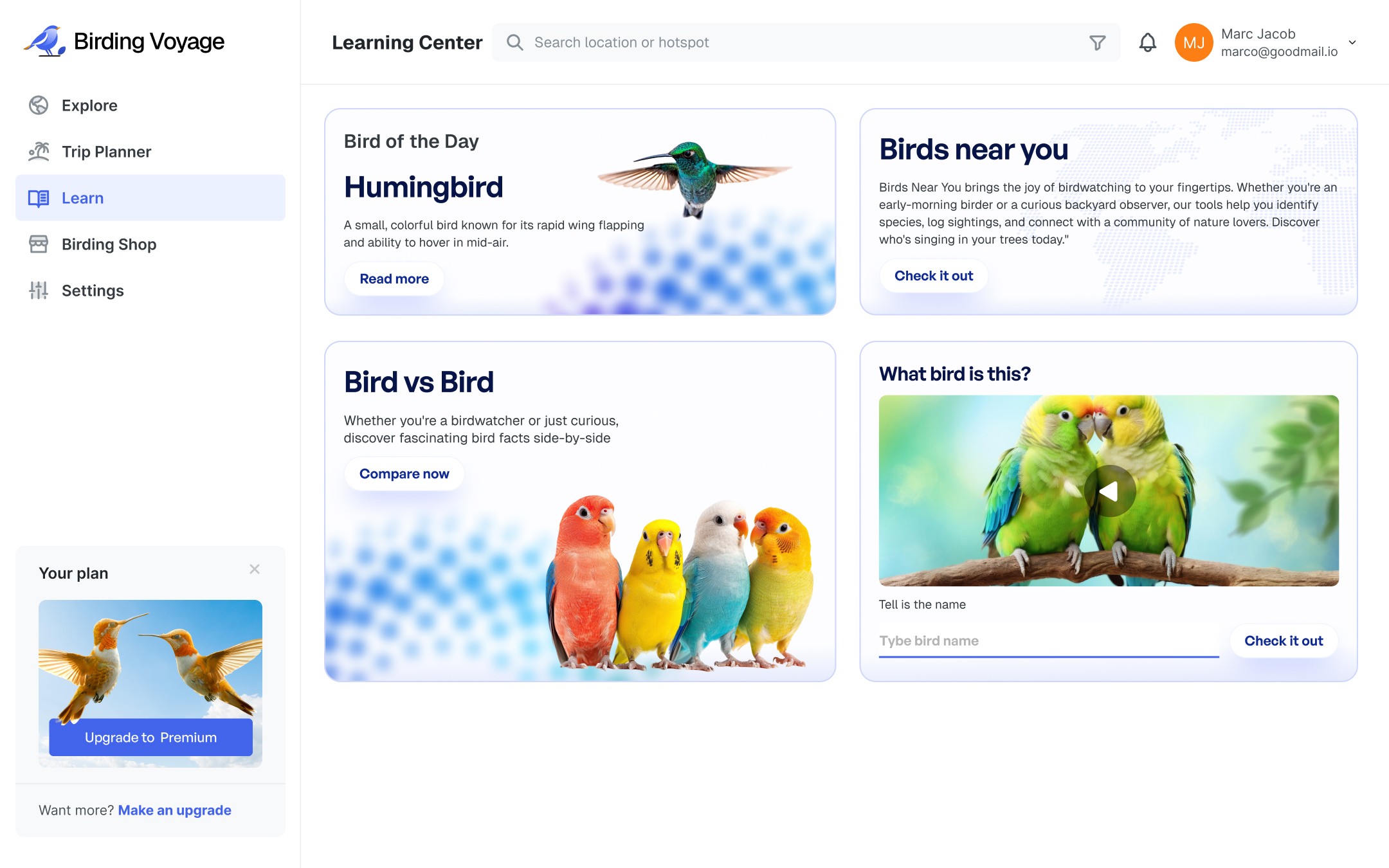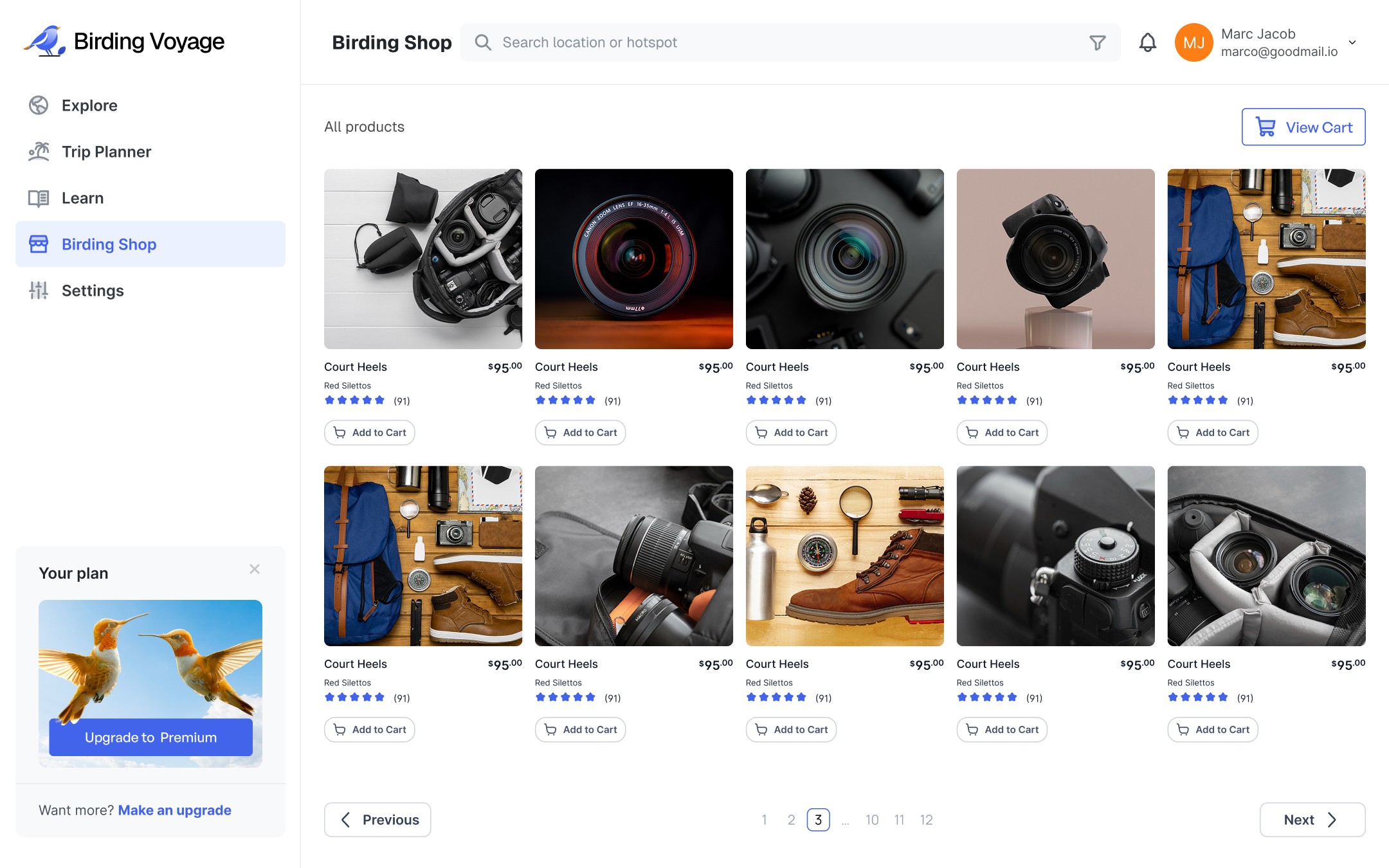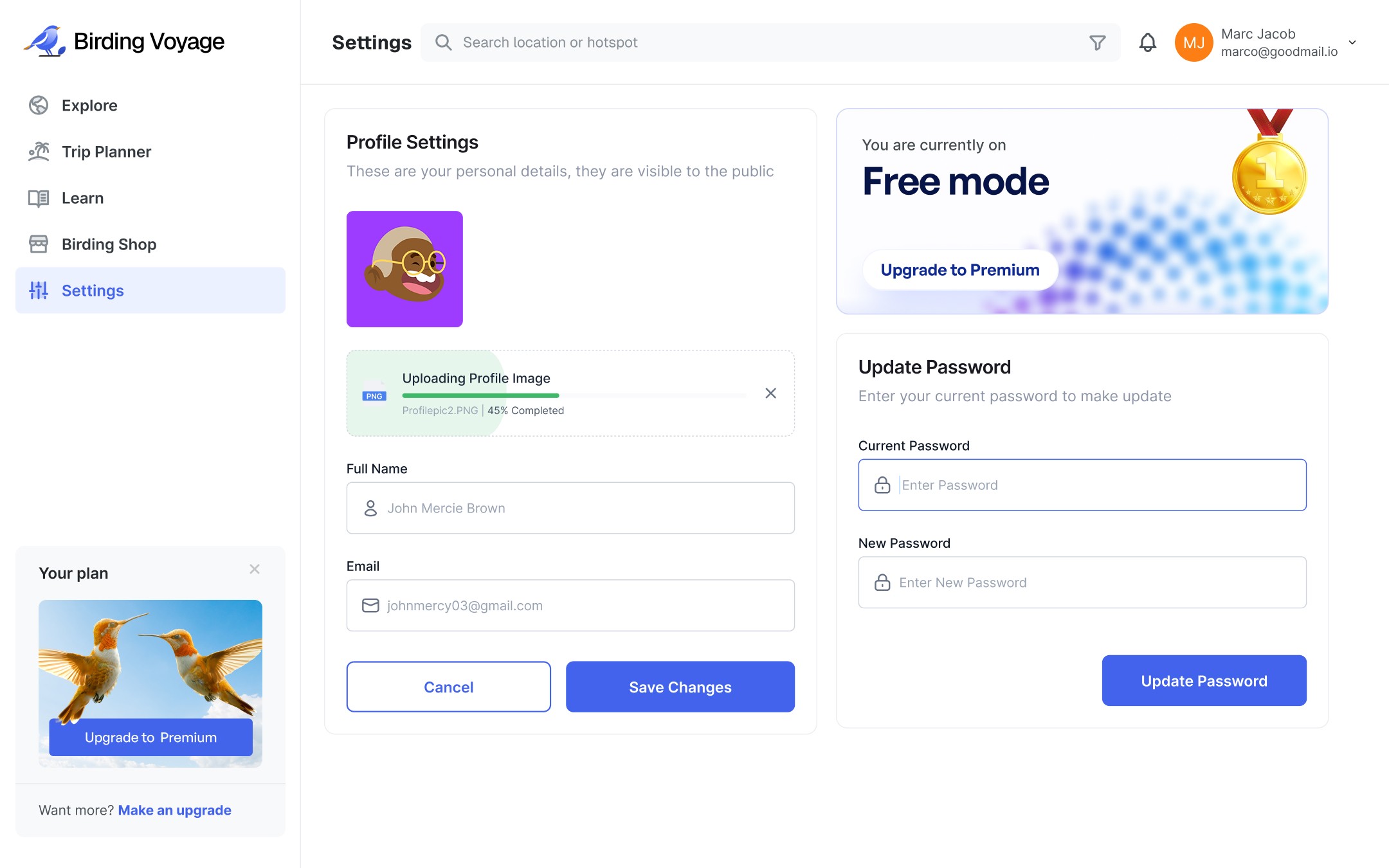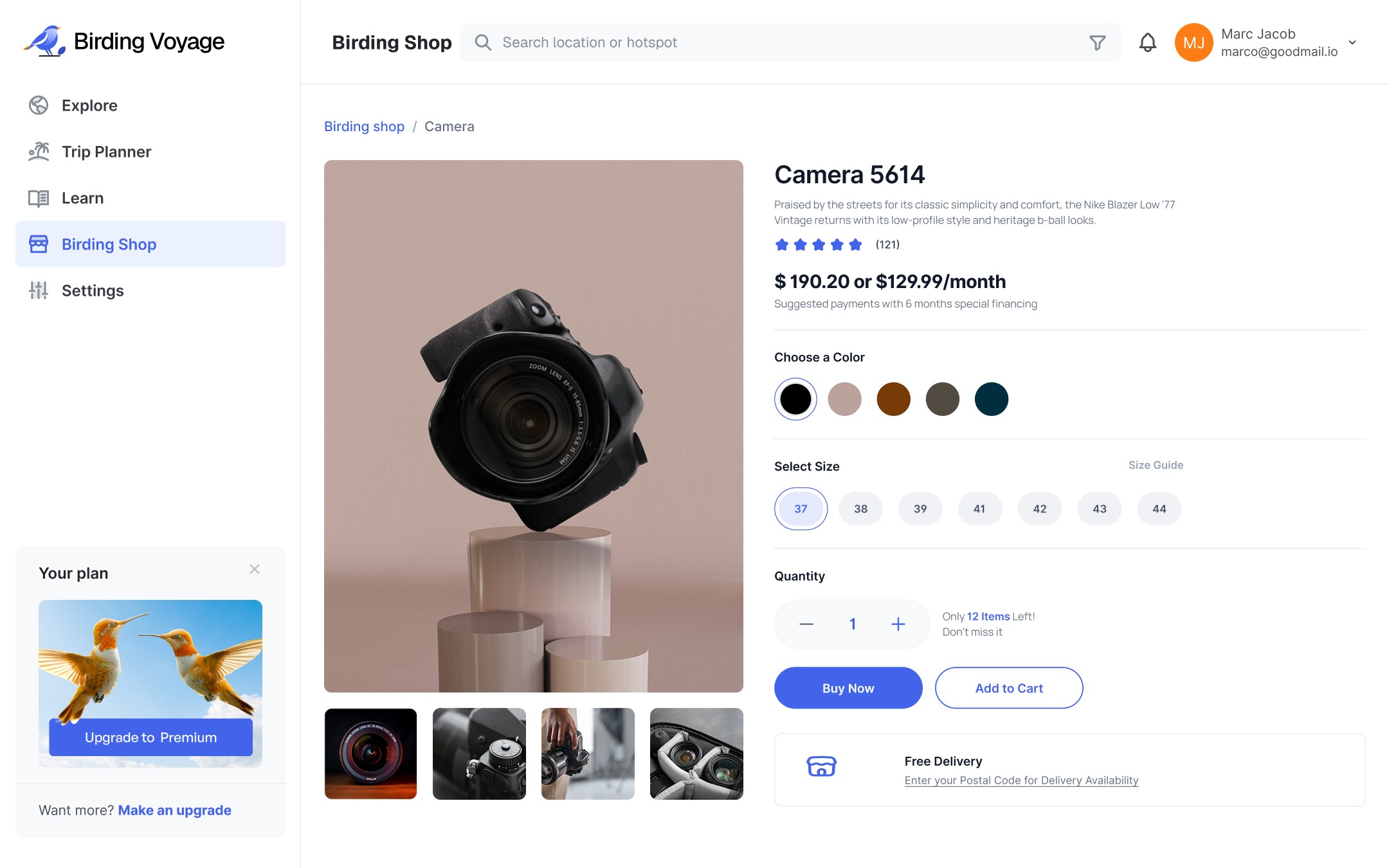
The birding community lacked a dedicated platform that could effectively: Present complex location data in an accessible way Organize multiple trip planning tools into an intuitive workflow Make learning about birds engaging and interactive Provide different access levels while maintaining visual consistency
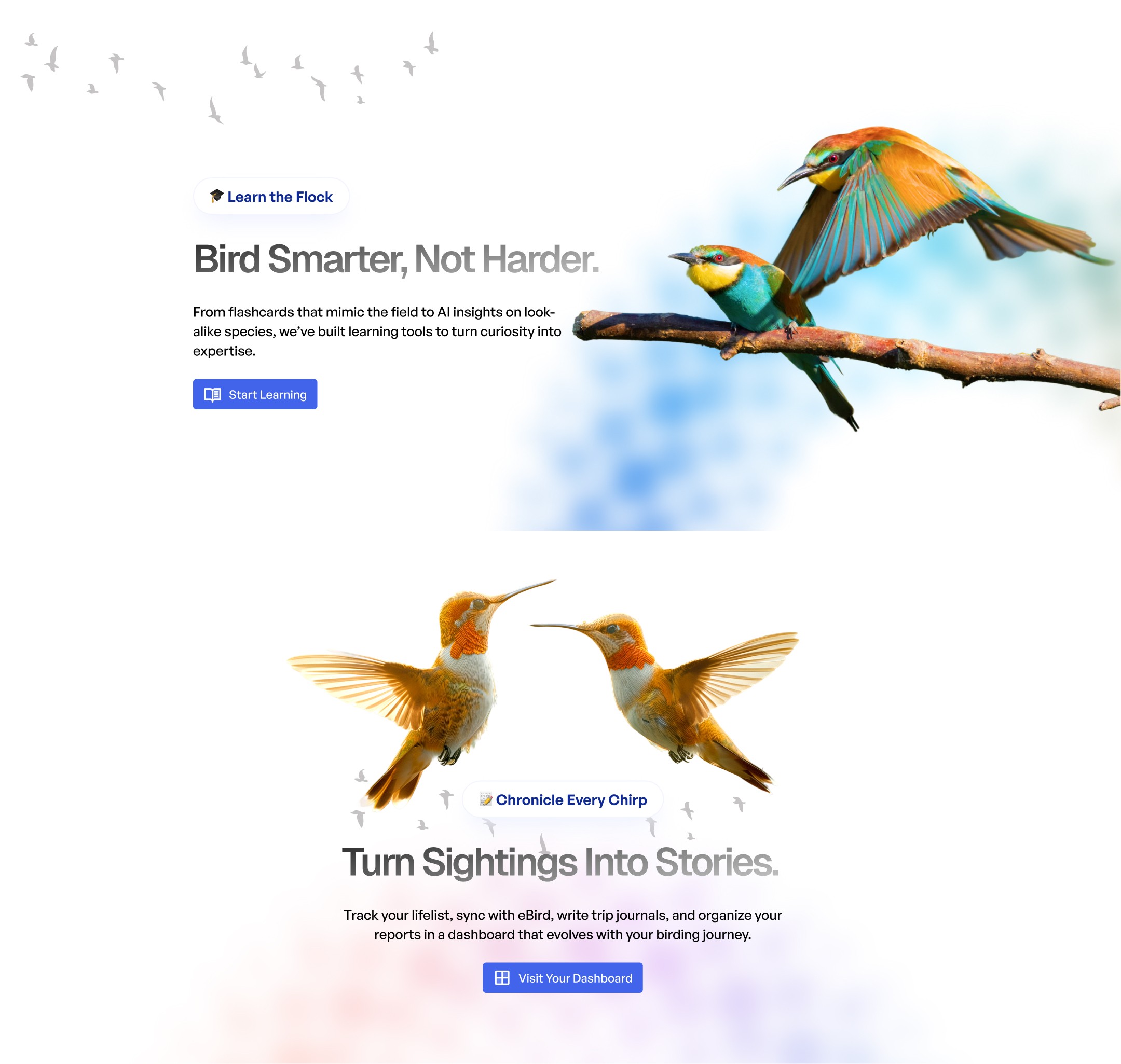
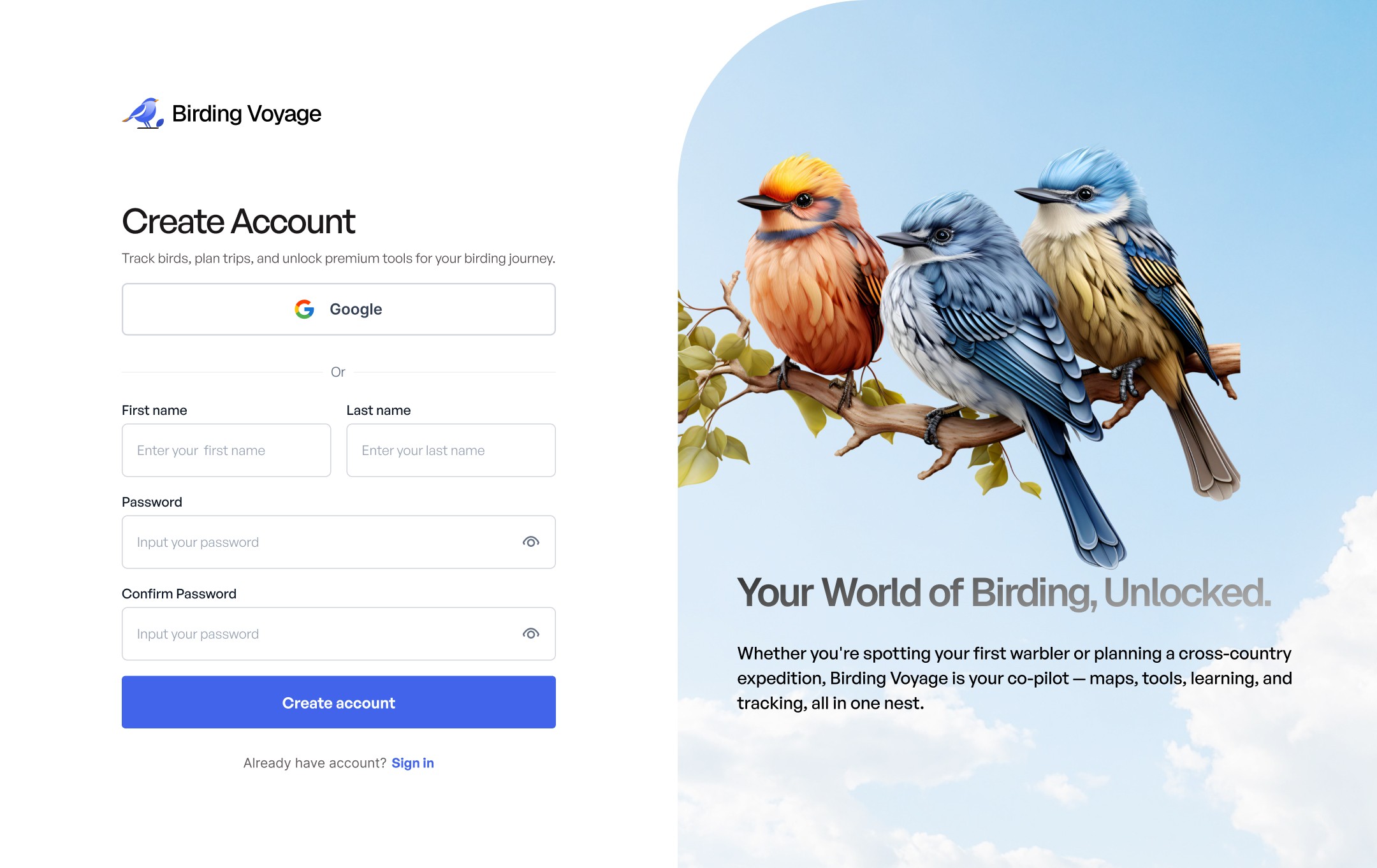
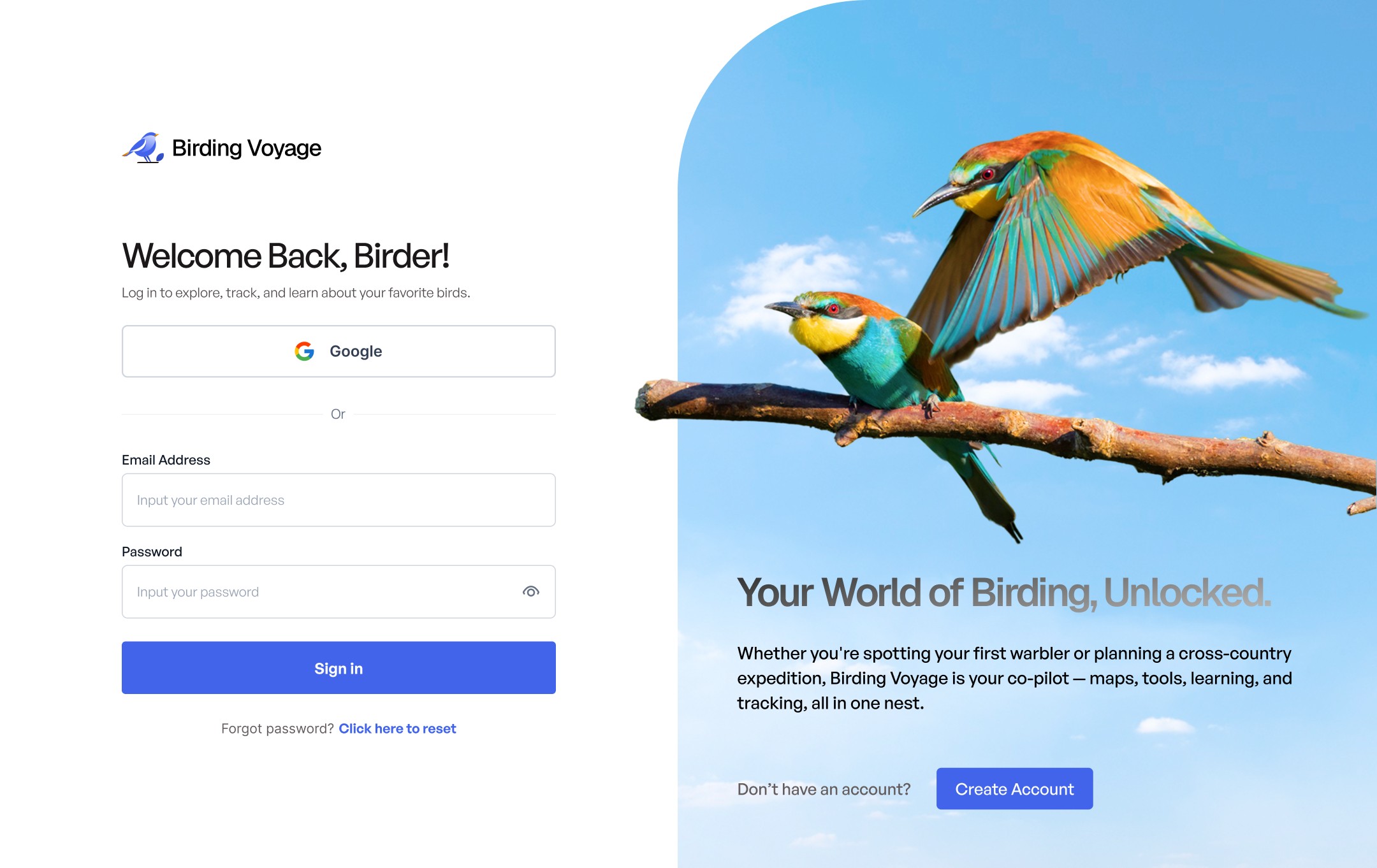
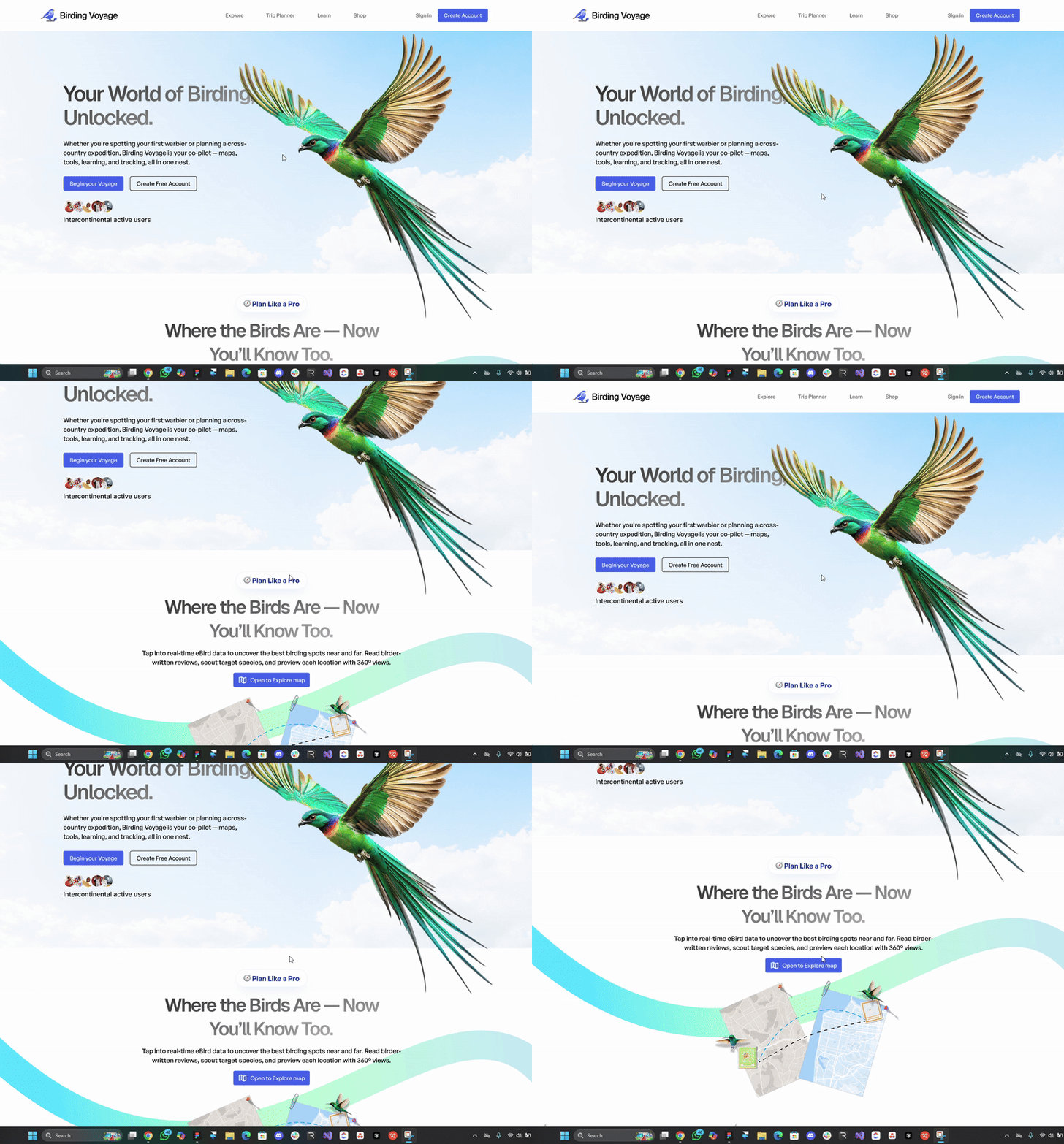
Design Decisions: Hero section that immediately conveys the platform's purpose Feature highlights that showcase key capabilities without overwhelming Clear pathways for both casual birders and serious enthusiasts Visual hierarchy that guides users through the sign-up process
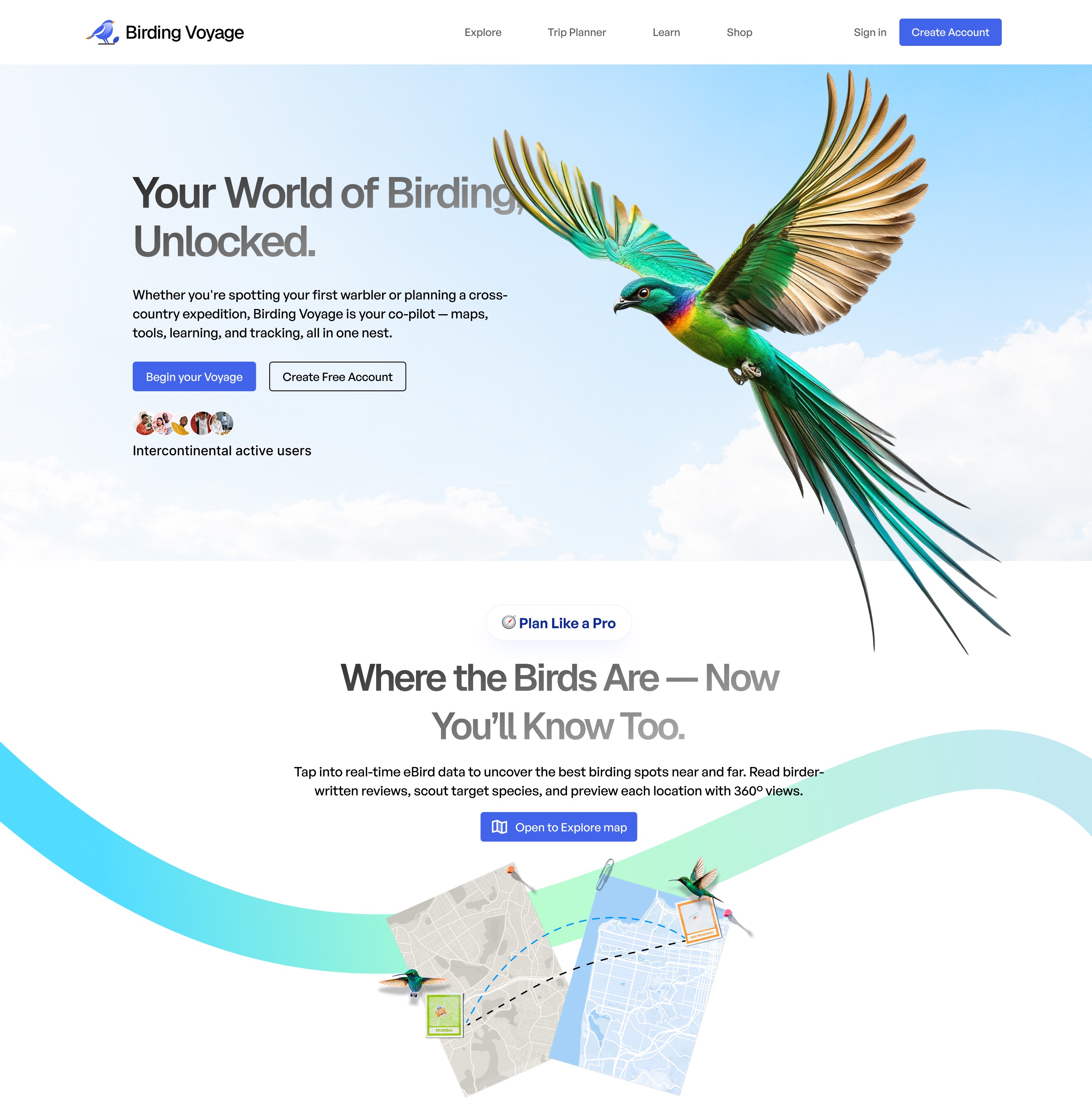
Design Impact
The interface design successfully addresses key user needs:
Discovery: Map-based exploration feels natural and engaging
Organization: Trip planning tools reduce the complexity of multi-location journeys
Learning: Educational features appeal to both beginners and advanced birders
Community: Review and sharing features encourage knowledge exchange
Efficiency: Dashboard design helps users quickly access their most important information
Design Process Highlights
User Research Integration: Designs reflect understanding of birding community habits and preferences
Iterative Refinement: Interface layouts evolved through multiple rounds of revision
Stakeholder Collaboration: Balanced business requirements with user needs
Future-Proofing: Design system created to accommodate feature expansion
Visual Design Philosophy
The overall design approach prioritizes clarity and functionality while maintaining the excitement and wonder of bird watching. Each interface balances information density with visual breathing room, ensuring that complex features feel approachable rather than overwhelming.
This project showcases my ability to design comprehensive platforms that serve specialized communities while maintaining broad usability principles. The Birding Voyage interfaces demonstrate how thoughtful design can enhance rather than complicate expert workflows.